Students often think that once they gain technical knowledge, they are ready to go and get that career they've always wanted. They often overlook the soft skills, thinking that they're something that we're all naturally good at (or not).
The image we carry in our minds about what robotics and Artificial Intelligence (AI) are is usually polarized. For many people, what we think of robots is likely influenced by popular culture; movies, books or comics. Many people imagine robots like Star Wars droids or Pixar’s Wall-E or at the other end of the spectrum something like the humanoid AI-enabled robot virtually indistinguishable from humans from the movie Ex-Machina.
It is quintessentially undeniable that the manufacturing landscape has been forever changed thanks to the widespread implementation of robotics technology. The addition of robots to an assembly line, however, is just the beginning. The real opportunity lies in the development of an autonomous workforce that can work alongside of, and in collaboration with, humans.
The terms Artificial Intelligence (AI) and Automation are often used interchangeably. They’re both, afterall, associated with software or physical machines (that is, robots) that allow us to operate more efficiently within the workplace.
Increasingly, companies and manufacturers are turning to automation and Robotic Process Automation (RPA) to reduce IT staff time, bolster efficiency and create an environment conducive to the successful implementation of digital transformations.
The idea of servitization is nothing new. Many manufacturers have always offered extended warranties, future inspections and extensive service contracts.
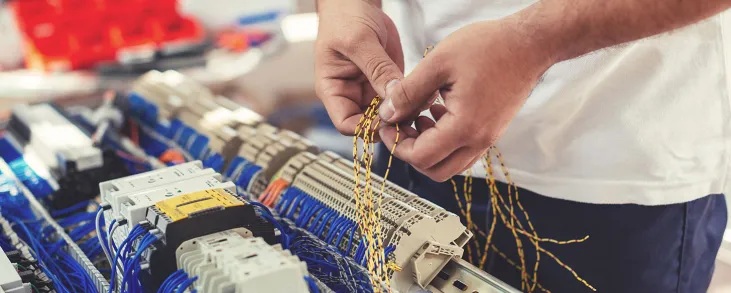
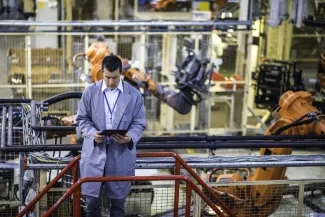
Automation technicians are the human brains behind the machines. They are responsible for keeping automated machines running smoothly and efficiently, and deal with any problems should they arise either in the programming or in the machine itself.